 English
 Español
  Português
  русский
  Français
  日本語
日本語  Deutsch
  tiếng Việt
  Italiano
  Nederlands
  ภาษาไทย
  Polski
  한국어
한국어  Svenska
  magyar
  Malay
Malay  বাংলা ভাষার
  Dansk
Dansk  Suomi
Suomi  हिन्दी
  Pilipino
  Türkçe
  Gaeilge
  العربية
  Indonesia
  Norsk
Norsk  تمل
تمل  český
český  ελληνικά
  український
  Javanese
  فارسی
فارسی  தமிழ்
தமிழ்  తెలుగు
  नेपाली
  Burmese
  български
  ລາວ
ລາວ  Latine
  Қазақша
  Euskal
  Azərbaycan
  Slovenský jazyk
  Македонски
  Lietuvos
  Eesti Keel
  Română
  Slovenski
  मराठी
मराठी  Srpski језик


Mobile Asphalt Mixing Plant: What Really Matters in the Field
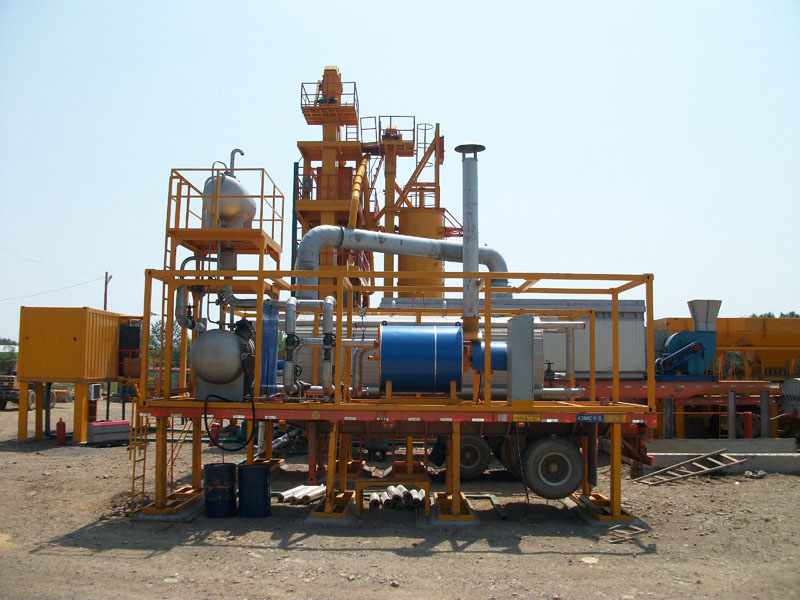
If your projects involve frequent site relocation or road maintenance, a mobile asphalt mixing plant is an indispensable asset. However, the term "mobile" is often overused in marketing. This guide cuts through the hype and provides actionable insights into the two core types, their key parameters, and real-world operational considerations.
Two Fundamental Configurations
Choosing the right equipment starts with understanding the fundamental difference between continuous and batch designs. This decision directly impacts production efficiency, mix quality, and your overall project cost.
Continuous Drum Mix Plants: Speed and Simplicity
These plants are engineered for mobility from the ground up. The drying drum also serves as the mixing chamber, eliminating the need for a separate mixing tower. The entire system is typically integrated onto one or two trailer chassis, enabling production within hours of arrival.
Advantages include a straightforward structure, extremely fast relocation, and a lower initial investment. Some advanced models, such as the Ammann ACM Prime, even integrate auxiliary components like bitumen tanks and control cabins onto wheeled frames, achieving genuine "100% mobility."
The primary limitation is less precise gradation control compared to batch plants. Continuous plants are best suited for lower-grade highways, municipal repairs, and projects with consistent mix designs. Common production capacities for mobile continuous plants range from 40 to 200 tons per hour.
Batch Mix Plants: Precision and Quality Assurance
For high-specification asphalt mixtures required in expressways or airport runways, a batch plant with an independent twin-shaft pugmill is essential. This configuration uses a discrete weighing cycle, where aggregates, filler, and bitumen are measured separately for each batch, ensuring strict adherence to the job mix formula.
Key benefits include superior mix quality, the ability to adjust recipes flexibly, and support for high percentages of reclaimed asphalt pavement (RAP), often up to 25% in modern mobile batch designs. While some manufacturers have adopted "towerless" configurations to improve mobility, batch plants generally require more complex assembly and foundation work than continuous units. Typical capacities for mobile batch plants fall in the 80 to 120 tons per hour range.
Side-by-Side Parameter Comparison
The table below compares key performance indicators for representative 120 t/h class mobile plants in both configurations.
| Parameter | Continuous Drum Plant | Batch Mix Plant |
|---|---|---|
| Typical Model | Ammann ACM Prime (180 t/h) | Ciber iNOVA 1200 / NFLG LBY1500 |
| Rated Capacity | 120 – 180 t/h | 120 t/h |
| Transport Units | 2 main trailers (auxiliaries optional) | 1 main trailer + separate attachments |
| Weighing Accuracy | Continuous flow control | Batch weighing: aggregate ±3%, bitumen ±2% |
| RAP Capability | Supported (ratio depends on process) | Up to 25% |
| Setup Time on Site | Several hours to 1 day | 1 to 3 days (including calibration) |
| Primary Application | Low to medium-grade roads, municipal maintenance | Expressways, airports, high-grade pavements |
Practical Insights on Installation and Relocation
A common misconception is that "mobile" equates to "no installation." This misunderstanding frequently causes project delays and operational issues.
First, a level and compacted hard-standing surface remains mandatory. The area beneath the mixing drum and pugmill must withstand significant dynamic loads. Most manufacturers recommend a reinforced concrete pad; otherwise, vibration can compromise weighing accuracy and even cause structural deformation over time.
Second, relocation involves far more than just hooking up a tractor. Rewiring electrical connections, reconnecting bitumen and fuel pipelines, and recalibrating all sensors are substantial tasks that are often underestimated. The on-site power supply capacity, particularly the transformer rating, is another hidden cost frequently overlooked during budgeting.
Finally, calibration is non-negotiable after every setup. A dry run followed by a full system recalibration, especially for the bitumen metering system, is critical. Even a small deviation in the oil-to-aggregate ratio will produce substandard material, leading to waste and potential rework.
Application-Based Selection Strategy
For long-term, fixed-site projects such as major highway networks, even a mobile plant may stay in place for two or more years. In this case, a mobile batch plant, despite higher initial complexity, pays off through superior mix consistency and pavement longevity, reducing life-cycle maintenance costs.
For short-duration, multi-site maintenance and repair jobs, the continuous drum plant is the clear winner. Models equipped with automated moisture compensation, which adjust the mix in real time based on feed material conditions, are particularly valuable for emergency repairs and adverse weather operations.
For overseas or remote sites, pay close attention to containerization. Several brands now offer designs that comply with 40-foot high-cube container dimensions, significantly reducing ocean freight costs compared to oversized trailer-type units.
Selecting a mobile asphalt mixing plant is ultimately a trade-off between rapid deployment and long-term quality. Continuous plants help you meet tight schedules, while batch plants protect your reputation for pavement performance. The real differentiator, however, lies not in marketing claims but in a careful assessment of total relocation costs—including crane rental, transport, and recalibration time. That is the true measure of whether a plant delivers genuine value over its service life.
Send Inquiry



X
We use cookies to offer you a better browsing experience, analyze site traffic and personalize content. By using this site, you agree to our use of cookies.
Privacy Policy