 English
 Español
  Português
  русский
  Français
  日本語
日本語  Deutsch
  tiếng Việt
  Italiano
  Nederlands
  ภาษาไทย
  Polski
  한국어
한국어  Svenska
  magyar
  Malay
Malay  বাংলা ভাষার
  Dansk
Dansk  Suomi
Suomi  हिन्दी
  Pilipino
  Türkçe
  Gaeilge
  العربية
  Indonesia
  Norsk
Norsk  تمل
تمل  český
český  ελληνικά
  український
  Javanese
  فارسی
فارسی  தமிழ்
தமிழ்  తెలుగు
  नेपाली
  Burmese
  български
  ລາວ
ລາວ  Latine
  Қазақша
  Euskal
  Azərbaycan
  Slovenský jazyk
  Македонски
  Lietuvos
  Eesti Keel
  Română
  Slovenski
  मराठी
मराठी  Srpski језик


The Essential Guide to Bitumen Storage Tank Management: Safety, Operations, and Maintenance Best Practices
Managing a bitumen storage tank is a systematic engineering task. The core principle is risk prevention and full-process control. For anyone involved in operating or managing these facilities, this practical guide covers the essential points—from design safety to daily operations and maintenance. As a petroleum derivative stored at high temperatures, bitumen presents risks including fire, explosion, severe burns, and exposure to toxic gases.
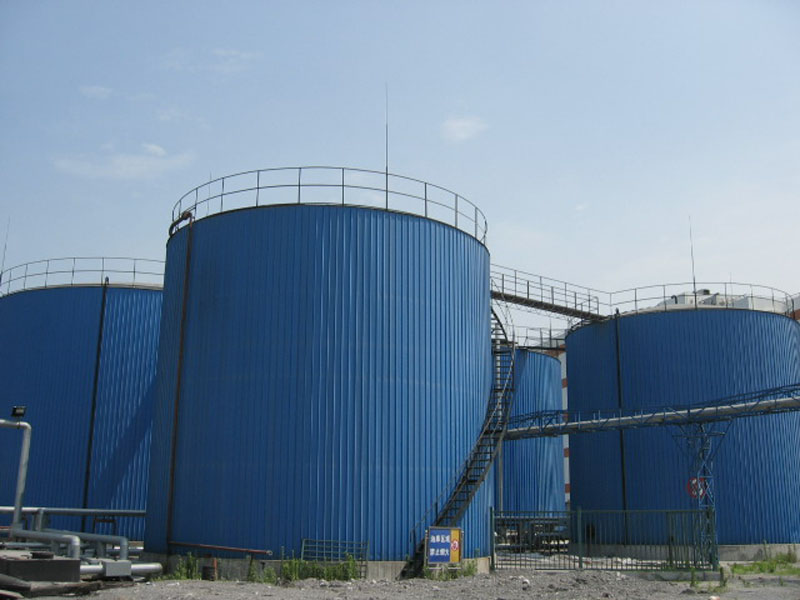
Tank Design and Mandatory Safety Features
Proper upfront design is the foundation of safe operations. Consider these non‑negotiable items during selection and installation:
-
Anti‑siphon design – If the fill pipe enters from the roof and extends to the tank bottom (to reduce oxidation), a vacuum breaker hole or slot must be provided at the top of the pipe. This prevents siphoning after unloading stops, which could otherwise cause bitumen to overflow from the tank.
-
Level monitoring and overflow prevention – A high‑level alarm is mandatory and must be calibrated and tested regularly. Industry data shows that nearly 90% of unloading overflows result from miscalculating the tank’s available capacity. A standard rule is to keep at least 10% of the tank volume as free space after every receipt.
-
Breathing valves and emergency relief –
- Atmospheric breather valves keep tank pressure within design limits during filling and withdrawal.
Emergency relief devices handle extreme cases such as fire, where bitumen expands rapidly. For tanks larger than 12,000 gallons (≈45.4 metric tons) that are located in the same bunded area as Class I or Class II flammable liquids, emergency relief is mandatory.
- Corrosion protection and earthing –
- Cathodic protection – Tank bottoms in direct contact with soil require an effective cathodic protection system to prevent external corrosion.
Earthing (grounding) – Proper grounding protects against lightning and static discharge. Note that earthing is not the same as cathodic protection; zinc grounding rods are preferred over copper materials.
Safe Unloading Procedures
Unloading is one of the highest‑risk steps. Following a disciplined standard operating procedure is essential. The requirements below synthesise best practice from the European Bitumen Association and major industry operators:
Pre‑unloading checks
-
Confirm tank capacity and product: verify in writing that the tank has enough room and that the delivered bitumen grade matches the order.
-
Verify connections: ensure the hose is attached to the correct tank inlet and that valves are lined up to the proper tank.
-
Check safety equipment: confirm that emergency eyewash and shower units are functional.
-
Secure the delivery vehicle: apply the parking brake and place wheel chocks.
During unloading
-
Set up an exclusion zone: only operators wearing full personal protective equipment may enter the 6‑metre radius around the unloading point.
-
No personnel on top of tanks: nobody is allowed to remain on the roof of the storage tank or the delivery vehicle during unloading.
-
Continuous monitoring: the receiving facility must watch the process visually, via CCTV, or through regular walk‑around checks. If the high‑level alarm activates, unloading must stop immediately; do not restart until the cause is identified and resolved.
-
Toxic gas awareness: the vapour space in hot bitumen tanks can accumulate hydrogen sulphide at dangerous concentrations. Depending on the risk assessment, define controlled areas, install fixed gas detectors, or use local exhaust ventilation.
Post‑unloading
-
Drain the hose: residual bitumen in the flexible hose must be discharged into a dedicated container provided by the receiver (e.g. a sand box) for safe disposal.
-
Complete paperwork: the receiver signs the delivery ticket, confirms the area is clean, and verifies that all connection locks are restored.
Temperature Control and Routine Maintenance
Temperature management directly affects bitumen quality and equipment service life.
-
Recommended storage temperature – For conventional paving‑grade bitumen, the typical holding range is 120°C to 140°C. Always follow the exact values given in the supplier’s Safety Data Sheet, and never exceed the maximum safe handling temperature specified by the industry.
- Heating system upkeep
Electric heating (external heating pads) – These can create localised “hot spots” on the tank shell, causing bitumen to overheat and form coke. They may also promote migration of light fractions into the insulation layer, creating a fire hazard. Inspect insulation integrity frequently.
-
Insulation and corrosion prevention – All piping must be insulated. Check the tank shell regularly; any breach in the cladding can allow moisture to enter the insulation and corrode the steel underneath. Pipes should be supported on steel saddles elevated above grade—never rest them directly on concrete or timber blocks.
Troubleshooting Common Issues and Safety Prohibitions
-
Water ingress (explosion hazard) – For tanks taken out of service or new tanks being brought online, absolute dryness is mandatory. Water introduced into hot bitumen will flash to steam instantly, expanding violently and causing a “boil‑over” or explosion. Always drain and inspect for water before restarting.
-
Line blockage – If the unloading pipeline is too long and lacks insulation and trace heating, bitumen can cool and solidify, causing a plug. Keep fill lines as short as possible and ensure they are fully insulated and trace‑heated.
- Hot‑work prohibition during maintenance – When working on bitumen pipelines, never use an open flame to melt out solidified bitumen. A far safer alternative is induction heaters, which significantly reduce fire risk.
Quick‑Reference Safety Card
| Category | Critical Data / Requirement |
|---|---|
| Overflow prevention | Keep ≥10% ullage after unloading; stop pumping immediately if high‑level alarm sounds. |
| Exclusion zone | During unloading, no‑go area within 6 metres (except operator); no personnel on tank roof. |
| Temperature limit | Follow SDS maximum; never exceed the approved storage temperature. |
| Fatal hazard – water | Water + hot bitumen = explosive steam generation; purge all water before restarting any tank. |
| Maintenance fire safety | DO NOT use open flame for clearing plugged lines; use induction heaters instead. |
Send Inquiry



X
We use cookies to offer you a better browsing experience, analyze site traffic and personalize content. By using this site, you agree to our use of cookies.
Privacy Policy