 English
 Español
 Português
 русский
 Français
 日本語
 Deutsch
 tiếng Việt
 Italiano
 Nederlands
 ภาษาไทย
 Polski
 한국어
 Svenska
 magyar
 Malay
 বাংলা ভাষার
 Dansk
 Suomi
 हिन्दी
 Pilipino
 Türkçe
 Gaeilge
 العربية
 Indonesia
 Norsk
 تمل
 český
 ελληνικά
 український
 Javanese
 فارسی
 தமிழ்
 తెలుగు
 नेपाली
 Burmese
 български
 ລາວ
 Latine
 Қазақша
 Euskal
 Azərbaycan
 Slovenský jazyk
 Македонски
 Lietuvos
 Eesti Keel
 Română
 Slovenski
 मराठी
 Srpski језик


How 50TPH Stationary Asphalt Mixing Plant Supports Road Construction
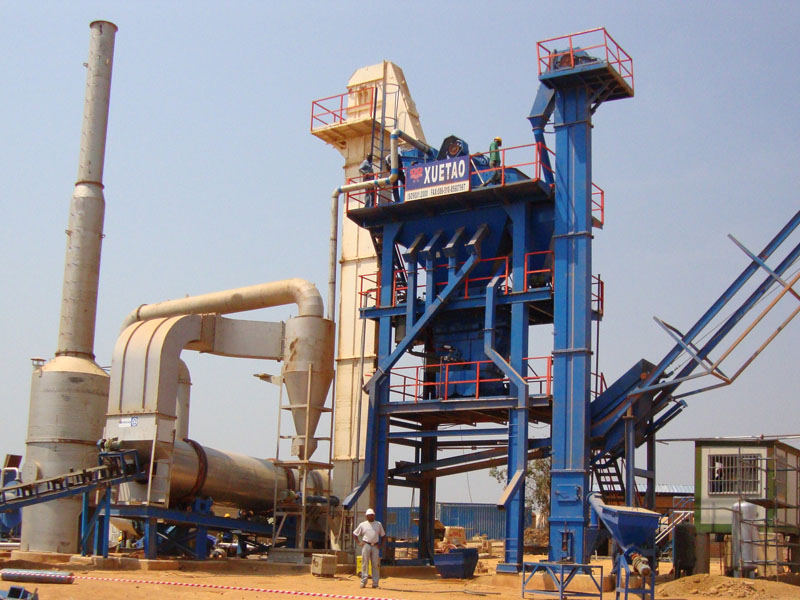
Road construction projects depend on reliable asphalt production, consistent material quality, and efficient coordination between production facilities and construction sites. As infrastructure development continues to require durable road surfaces and controlled construction processes, the 50TPH Stationary Asphalt Mixing Plant represents one of the production configurations used for projects with moderate asphalt supply requirements. Its stationary layout provides an organized production environment where aggregate heating, screening, weighing, mixing, and material discharge can be managed through coordinated operations.
Understanding the Role of Asphalt Mixing Capacity
Production capacity is an important consideration when selecting an asphalt mixing plant. A nominal output of 50 tonnes per hour provides a reference for evaluating whether a plant can support the expected material demand of a road construction project. Actual production may vary depending on aggregate moisture, mix design, operating conditions, equipment configuration, and production cycle efficiency.
For regional road projects, municipal road improvements, maintenance operations, and certain medium-scale infrastructure developments, this capacity range can provide a practical balance between production demand and facility requirements. Project planners need to consider not only hourly output but also daily working schedules, transportation distances, storage capacity, and the availability of raw materials.
How the Stationary Production Process Works
A typical stationary asphalt mixing process begins with the storage and feeding of aggregates in different size categories. Cold aggregate feeders regulate the supply of materials according to the required mix proportions. The aggregates then move through a drying drum, where heat removes moisture and raises the material temperature to the level required for mixing.
After drying, hot aggregates are transported to a screening system for separation into different particle sizes. These fractions enter separate hot aggregate storage bins before being weighed according to the specified mix formula. Mineral filler and asphalt binder are also measured and introduced during the mixing stage. The mixing cycle combines these materials into a relatively uniform asphalt mixture suitable for subsequent transportation and paving.
In this process, the 50TPH Stationary Asphalt Mixing Plant relies on coordination between material feeding, temperature control, weighing systems, and mixing operations. Each stage affects the final mixture, making process monitoring an essential part of daily production management.
Supporting Consistent Asphalt Mixture Quality
Road pavement performance is closely related to aggregate grading, binder content, mixing temperature, and material uniformity. Variations in these factors may influence compaction, durability, resistance to deformation, and long-term pavement behavior.
Automated weighing and control systems help operators maintain the specified proportions of different materials. Temperature monitoring also provides important information about aggregate drying and asphalt mixing conditions. However, automated equipment does not eliminate the need for laboratory testing, calibration, and regular inspection.
Quality management should include aggregate sampling, binder verification, mix design checks, and finished mixture testing. These procedures help determine whether production meets the technical requirements established for a particular road project.
Improving Construction Coordination and Site Management
Asphalt production and paving operations must be carefully coordinated because the mixture needs to arrive at the construction site within an appropriate temperature range. Delays during loading, transportation, or unloading can affect workability and compaction quality.
A stationary plant offers a fixed production location, allowing operators to organize material storage, equipment maintenance, loading arrangements, and production schedules around a defined site layout. For projects with a relatively stable construction location and predictable material demand, this arrangement can simplify operational planning.
When evaluating a 50TPH Stationary Asphalt Mixing Plant, project managers should also examine the distance between the production facility and paving area, truck availability, expected daily consumption, and temporary storage arrangements. These factors are important for balancing plant output with actual construction progress.
Environmental Management and Energy Considerations
Environmental performance is another important aspect of modern asphalt production. Aggregate drying requires thermal energy, while material handling and mixing may generate dust and gaseous emissions. Fuel consumption, burner efficiency, insulation, and operating practices therefore influence the overall environmental profile of a production facility.
Dust collection systems, including bag filters, can help control particulate emissions when properly selected, operated, and maintained. Enclosed material transfer points and effective storage management can further reduce dust dispersion. Regular monitoring of fuel consumption and combustion conditions also helps identify opportunities to improve energy efficiency.
Environmental requirements differ between regions, so plant operators must follow applicable emission standards, environmental permits, and workplace safety regulations rather than relying on equipment specifications alone.
Key Factors in Project Planning
Before establishing an asphalt production facility, contractors should assess the project duration, expected output, aggregate supply, binder availability, land conditions, utility access, and maintenance resources. Foundation preparation, equipment installation, electrical connections, and operator training also influence commissioning schedules.
It is equally important to consider whether the production system can accommodate the required asphalt mix types and future changes in project specifications. Technical documentation, equipment inspection records, calibration procedures, and preventive maintenance plans provide a basis for consistent operation.
Conclusion
Efficient road construction requires more than a specific production capacity. It depends on the coordination of material supply, thermal processing, accurate weighing, mixture quality control, transportation, and paving operations. A properly planned 50TPH Stationary Asphalt Mixing Plant can support these activities by providing a structured production process for projects with moderate asphalt demand. Its practical contribution ultimately depends on project conditions, equipment configuration, operational management, and compliance with applicable technical and environmental standards.
Send Inquiry



X
We use cookies to offer you a better browsing experience, analyze site traffic and personalize content. By using this site, you agree to our use of cookies.
Privacy Policy